RiseGuide: Expert Insights
- 4.2
- Rating
- 100.00K
- Installs
- Free
- Price

 Analysis by App-foxy
I approached RiseGuide: Expert Insights as a small daily learning habit rather than another app promising to transform everything at once. That distinction matters. Its central idea is simple: bring expert-led self-improvement into a short, repeatable lesson that I can fit around ordinary life. In the education category, where many apps either feel like full courses or reduce learning to quick motivational slogans, RiseGuide sits somewhere between the two.
The app is free to install and is made by RiseGuide. It is suitable for Everyone, runs on Android 7.0 and later, and has reached over 50 thousand installs. Its average rating is 4.5 from around 2 thousand ratings, with hundreds of written reviews behind that score. Those figures suggest that the daily format connects with a meaningful group of users, but they do not tell the whole story. In my experience, the real question is whether I want a guided prompt each day or a deeper, more structured learning system.
What makes the app worth considering is not the promise of consuming endless material. It is the attempt to turn self-improvement into a manageable appointment. I found that approach more useful on busy days than opening a large library and wondering where to begin. At the same time, the compact format creates limits that become important if I want detailed instruction, formal progress tracking, or a complete course in one subject.
You May Also Like

 Blood Strike: 2.5 Anniversary
Blood Strike’s Loadouts Turn Every Drop Into a Tactical Gamble
A close look at Blood Strike’s custom loadouts: how fast access to signature weapons reshapes its battle royale rhythm, rewards preparation, and narrows the gap between fights.

 Pandora - Music & Podcasts
Pandora’s Music Is Easy to Start, but Harder to Recover
Pandora’s strength is its low-effort path from a seed to a station. Its weak spot is how much confidence it asks you to place in connection, setup, and quiet recovery.

 8 Ball Pool
 Is Built on Rivalries, Rematches, and Routine
A close look at the rivalries, rematches, shared routines, and unanswered safety questions that turn a quick pool match into a persistent mobile community.

 Samsung Music
’s Quiet Strength Is Playing What You Already Own
Its reach comes less from spectacle than from dependable access to a personal library. That simplicity is both the app’s strongest retention engine and its ceiling.

 AccuWeather: Weather Radar
AccuWeather Review: A Quick, Clear Forecast for Everyday Decisions
For everyday plans, the best forecast is the one you can understand quickly. AccuWeather makes rain timing, radar, and local conditions easy to act on, with a few trade-offs.

 Hill Climb Racing
Why Hill Climb Racing Still Turns Crashes Into One More Run
A tiny car, a bumpy hill and one more upgrade: Hill Climb Racing keeps resurfacing because its simple chaos makes every near-miss feel personal.
More From Our News Desk
View All News


One daily lesson changes the way self-improvement feels
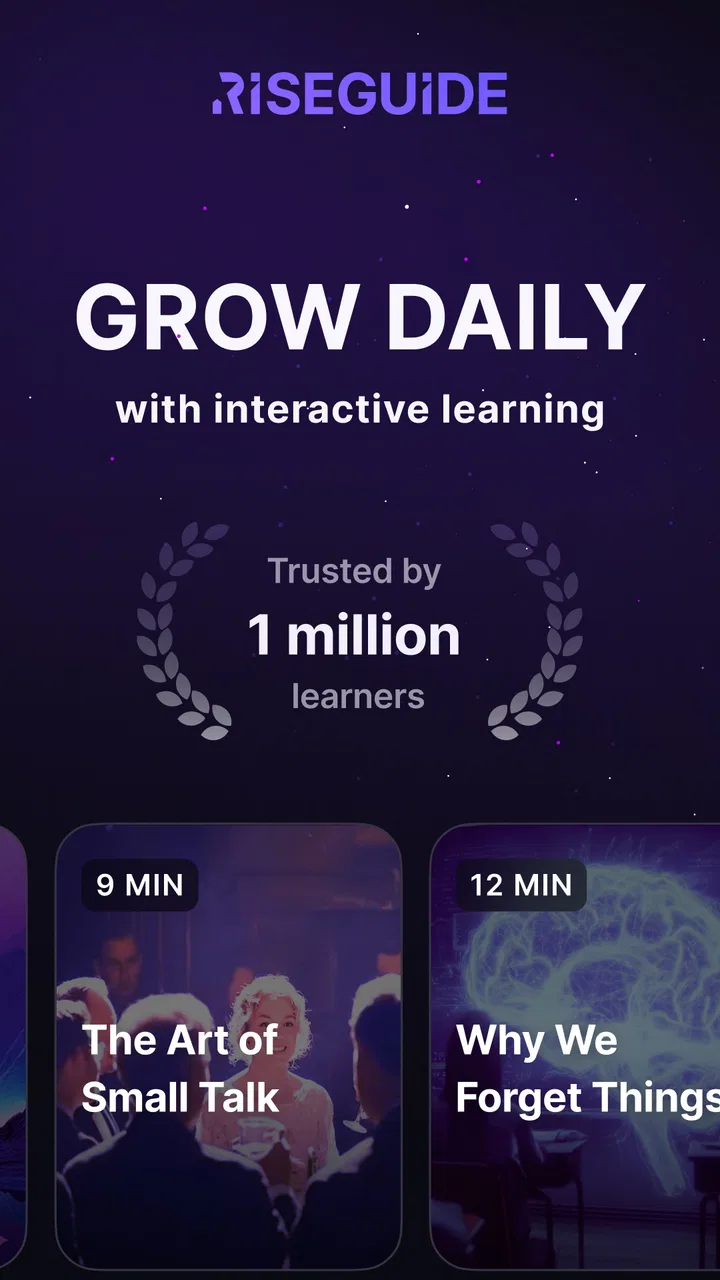
The defining capability here is the daily lesson. Rather than asking me to build a complicated study plan, RiseGuide gives the habit a narrow shape: return, read or work through the lesson, and carry one idea into the day. That focus is the app’s strongest practical choice. It reduces the mental effort required before learning even starts.
I especially liked the difference between choosing to learn and choosing what to learn. With a broad alternative such as a video platform, podcast app, or general reading service, I can find excellent material, but I also spend time comparing options, saving items, and abandoning them. RiseGuide’s lesson-based approach is better suited to the moment when I have a few quiet minutes and want direction rather than discovery.
The expert angle also changes the tone. A daily lesson feels more purposeful when it is presented as a considered insight instead of an unfiltered collection of advice. I would not treat every lesson as a substitute for professional education or personal counseling, but the framing encourages me to pause and examine an idea rather than merely scroll past it.
The real value is consistency, not volume. A single lesson will not produce a dramatic change by itself. The benefit comes from creating a reliable point in the day where I think about a skill, behavior, or decision. That makes the app a better fit for gradual improvement than for users who want to complete a large syllabus quickly.
How I use a lesson without letting it become passive reading
My most effective routine is to open the app at a predictable transition point, such as after breakfast or before putting my phone away at night. I read the lesson once for the main idea, then return to the part that feels most applicable. Instead of trying to remember every sentence, I choose one question: where could this idea affect something I will do today?
That small change prevents the common problem with self-improvement content: feeling productive while doing nothing differently. If a lesson concerns focus, I might use it to decide what task deserves uninterrupted attention. If it concerns communication, I might apply it to one conversation rather than making a vague promise to “communicate better.” The app supplies the daily nudge, but I still have to translate it into behavior.
Another useful approach is to treat the lesson as a conversation starter. I can explain the main point to a friend, write a short note, or test it against a situation that already happened. This is more valuable than rushing through several lessons. The daily rhythm works best when I leave enough space for an idea to settle.
Users wondering whether the app requires a large time commitment should find the format approachable. The entire concept is built around one lesson at a time, so I do not need to reserve an evening for it. However, “short” should not be confused with “complete.” A brief lesson can introduce a principle, but applying that principle may require practice, reflection, or outside material.
A realistic weekday use case
Imagine a user who has ten minutes before starting work. They do not want a full productivity course, and they are tired of saving articles that never get opened again. RiseGuide can become a simple morning checkpoint. The user completes the day’s lesson, identifies one behavior to test, and keeps that behavior in mind during the first important task.
At lunch, the same person can ask whether the idea changed anything. If it did, they have a concrete example. If it did not, they can decide whether the lesson was too general, poorly timed, or simply not relevant to that day. That second check is important because it turns consumption into a small experiment.
For someone with an irregular schedule, the routine may look different. A shift worker, student, or parent might use the app during a commute or after household responsibilities are finished. The advantage is that the lesson does not demand a fixed classroom-style session. The drawback is that a flexible habit can also become an easy habit to postpone.
Where it compares well with familiar alternatives
Compared with books, RiseGuide is easier to start and less demanding in the moment. A book can provide richer arguments, examples, and context, but opening one often requires more attention than I have available. The app is better when I want a guided starting point; a book is better when I want to investigate a subject deeply.
Compared with podcasts and long-form videos, the daily lesson is less dependent on finding a suitable episode. Audio and video are excellent during travel or exercise, while a compact lesson is more convenient when I need to think carefully or revisit a point. RiseGuide does not replace those formats; it gives me a more deliberate alternative to passive listening.
Compared with habit trackers, the app appears more focused on the idea that precedes a behavior. A tracker can tell me whether I completed a routine, but it may not help me understand why the routine matters or how to adjust it. RiseGuide’s strength is the daily learning prompt. A habit tracker remains the better tool for recording streaks, schedules, and measurable completion.
Compared with structured online courses, RiseGuide is less intimidating but also less comprehensive. A course usually has a defined sequence, exercises, assessments, and a clear endpoint. The daily lesson model is more comfortable for exploration and gradual reflection, but users seeking credentials, technical mastery, or a carefully staged curriculum should look elsewhere.
The tradeoff between expert guidance and personal depth
The expert-led framing is useful because it gives each lesson authority and direction. Still, I would keep a healthy distance from any self-improvement advice that sounds universally applicable. An insight that helps one person may be unrealistic for another person’s health, work, finances, or family situation. I use the lessons as prompts to evaluate my choices, not as rules that override context.
This is also where the app’s short format can feel restrictive. A compact lesson may leave me wanting examples, counterarguments, or a practical worksheet. When that happens, I have to do the deeper work myself. That is not necessarily a flaw, but it means the app rewards users who are willing to continue thinking after the screen is closed.
There is another practical tradeoff around motivation. The daily structure can make starting easier, but it may not provide enough pressure for someone who needs deadlines or accountability. If I already struggle to maintain routines, simply having one lesson available may not be sufficient. Pairing the app with a calendar reminder, a notebook, or a friend can make the habit more dependable without changing what the app itself does.
The free entry point lowers the barrier to trying it, while in-app purchases range from $9.99 to $79.99 per item. That makes it sensible to begin cautiously and decide whether the experience earns a place in my routine before paying for anything. I would evaluate a purchase based on whether it gives me more useful depth or simply more content to consume. The important question is not how much material I can access, but how much I will actually apply.
Small workflow choices that improve the experience
First, I would avoid opening the app at the same time as distracting social feeds. The daily lesson works best when it receives a clean few minutes rather than being squeezed between notifications. Even a short pause makes it easier to remember the central idea.
Second, I would keep a one-line record of the action I tested. This creates a personal index of lessons that proved useful, confusing, or irrelevant. Over time, that record is more valuable than trying to recall every topic from memory. It also helps identify patterns: perhaps the user benefits most from lessons about communication, decision-making, or focus.
Third, I would revisit a lesson only when it connects to a real problem. Repetition is helpful when circumstances change. Reading the same idea after a difficult meeting, a missed deadline, or a new responsibility can reveal an application that was not obvious the first time. This makes the daily format more flexible than a simple checklist.
Finally, I would not judge the app by whether every lesson feels profound. No daily learning service can make every entry personally relevant. The better test is whether enough lessons lead to useful reflection to justify returning. A quiet, practical idea can sometimes be more valuable than an impressive-sounding one that I never use.
Who will gain the most from RiseGuide
I think the strongest audience is people who want a guided self-improvement habit but feel overwhelmed by large libraries. Beginners can use the daily lesson as a starting point, while experienced learners may appreciate it as a prompt for reflection between longer books or courses. It is also well suited to users who prefer reading and thinking in small portions rather than committing to extended sessions.
It may be particularly helpful for someone rebuilding a learning routine. After a busy period, opening a large course can feel like another obligation. One lesson is psychologically easier to approach. The user can begin with a modest commitment and increase the depth only when a topic genuinely deserves more attention.
I would be more cautious about recommending it to someone who needs formal instruction. Students preparing for an exam, professionals learning a regulated skill, or anyone seeking a certificate will likely need a structured educational platform with defined outcomes. Likewise, users who want detailed tracking may prefer a dedicated habit or study app alongside, or instead of, this one.
People who dislike motivational language should also try it with realistic expectations. The expert perspective may make the content feel grounded, but self-improvement remains personal. If a lesson feels too broad, the best response is not to force it; test the idea against a specific situation and move on if it does not help.
My overall recommendation
RiseGuide: Expert Insights is a focused education app built around a useful constraint: one daily lesson. I found that constraint more important than the promise of having access to a large amount of advice. It makes learning easier to begin, encourages a repeatable rhythm, and gives me a clear prompt to carry into ordinary decisions.
Its weaknesses come from the same design choice. A daily lesson cannot provide the depth of a book, the structure of a course, or the measurable routines of a dedicated tracker. Some users will also need external reminders and personal notes to turn the content into action. Those are meaningful limitations, especially for anyone expecting a complete self-improvement system.
Still, for a free app with an Everyone age rating and a current version of 1.0.392, I see a sensible role for it in a personal learning routine. I would recommend trying it to anyone who wants expert-guided reflection without signing up for an intimidating curriculum. Start with a few minutes, apply one idea to a real situation, and judge the app by the changes it helps you make—not by how many lessons you manage to finish.
FAQs for RiseGuide: Expert Insights
01What is RiseGuide: Expert Insights, and how does it work?
RiseGuide: Expert Insights is a comprehensive app designed to provide users with expert advice and insights across various fields. Whether you're seeking guidance in personal development, career advancement, or wellness, this app connects you with industry professionals who offer tailored advice through articles, videos, and interactive sessions. It’s an invaluable resource for anyone looking to learn and grow.
02Is RiseGuide: Expert Insights free to use, or are there subscription options?
RiseGuide offers a free version with access to a limited selection of content. For users who want to unlock the full potential of the app, including personalized recommendations and premium content, there are subscription options available. These subscriptions often come with additional features and exclusive insights from top experts.
03How user-friendly is the RiseGuide app for beginners?
The app is designed with user experience in mind, offering a clean, intuitive interface that is easy to navigate even for beginners. Upon first use, there is a guided tour that helps new users understand how to access various features. Additionally, the app's design ensures that finding content relevant to your interests is straightforward and efficient.
04What kind of expert content can users expect from RiseGuide?
RiseGuide offers a diverse range of content including articles, video tutorials, webinars, and podcasts from experts in fields such as finance, health, technology, and lifestyle. The content is updated regularly to provide the latest insights and trends, ensuring users have access to fresh and relevant information to aid their personal and professional growth.
05Can users interact with experts directly through the app?
Yes, one of the standout features of RiseGuide is the ability for users to interact directly with experts. Depending on your subscription level, you can participate in live Q&A sessions, webinars, or even schedule one-on-one consultations. This allows for a more personalized experience and the opportunity to have specific questions addressed by professionals.
Pros
- User-friendly interface suitable for all ages.
- Provides expert insights on various topics.
- Regular updates keep content fresh.
- Offline access available for saved articles.
- Customizable notification settings.
Cons
- Limited free content—subscription required.
- Occasional bugs in the search feature.
- High data usage for video content.
- No dark mode option available.
- In-app ads can be intrusive.

RiseGuide: Expert Insights
Gallery